


Read Nour Abou Aisha’s latest articles, revealing crucial challenges to survival due to the ongoing genocide and occupation.
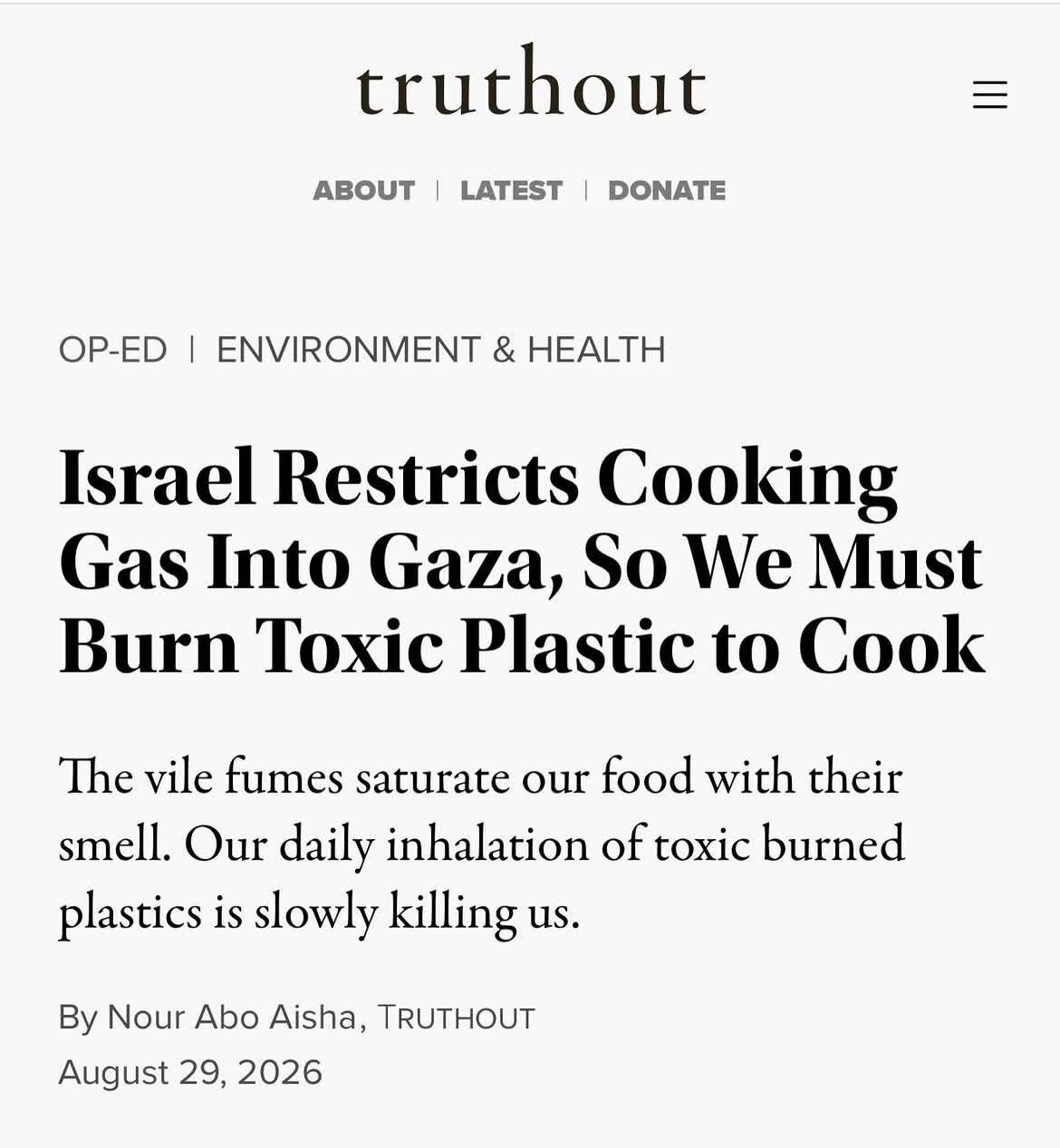
“Before the ceasefire last year, Israel subjected Gaza to a comprehensive and enforced siege which prevented countless necessities from entering the Strip, including cooking gas. However, after the Witkoff Agreement was signed in October 2025, which contained a humanitarian clause allowing 600 trucks to enter daily, including 50 trucks designated for fuel and cooking gas, we Gazans believed that we would finally be able to use healthy and safe gas and that our suffering of looking for alternatives to cook would be over.”
In summary of her article, Nour writes “The health and environmental repercussions of Israel’s restrictions on fuel, forcing a whole society to breathe toxic pollutants on a daily basis, is more than just a fleeting humanitarian failure; it’s a kind of slow execution. This health and environmental disaster will cost future generations dearly. While the world ignores our ongoing plight, black smoke fills our lungs and burns our eyes, and ravages what remains of our bodies”.
Read the full article here.
A piece on Al Jazeera focuses on the unreliability of cash payments in neighbourhoods of Gaza City.
“In a clothing shop in Gaza City's Sheikh Radwan neighbourhood, Firas Zaqloul stands helplessly as he tries to pay for his purchases.
The problem is that he can't get the seller to accept his money.”
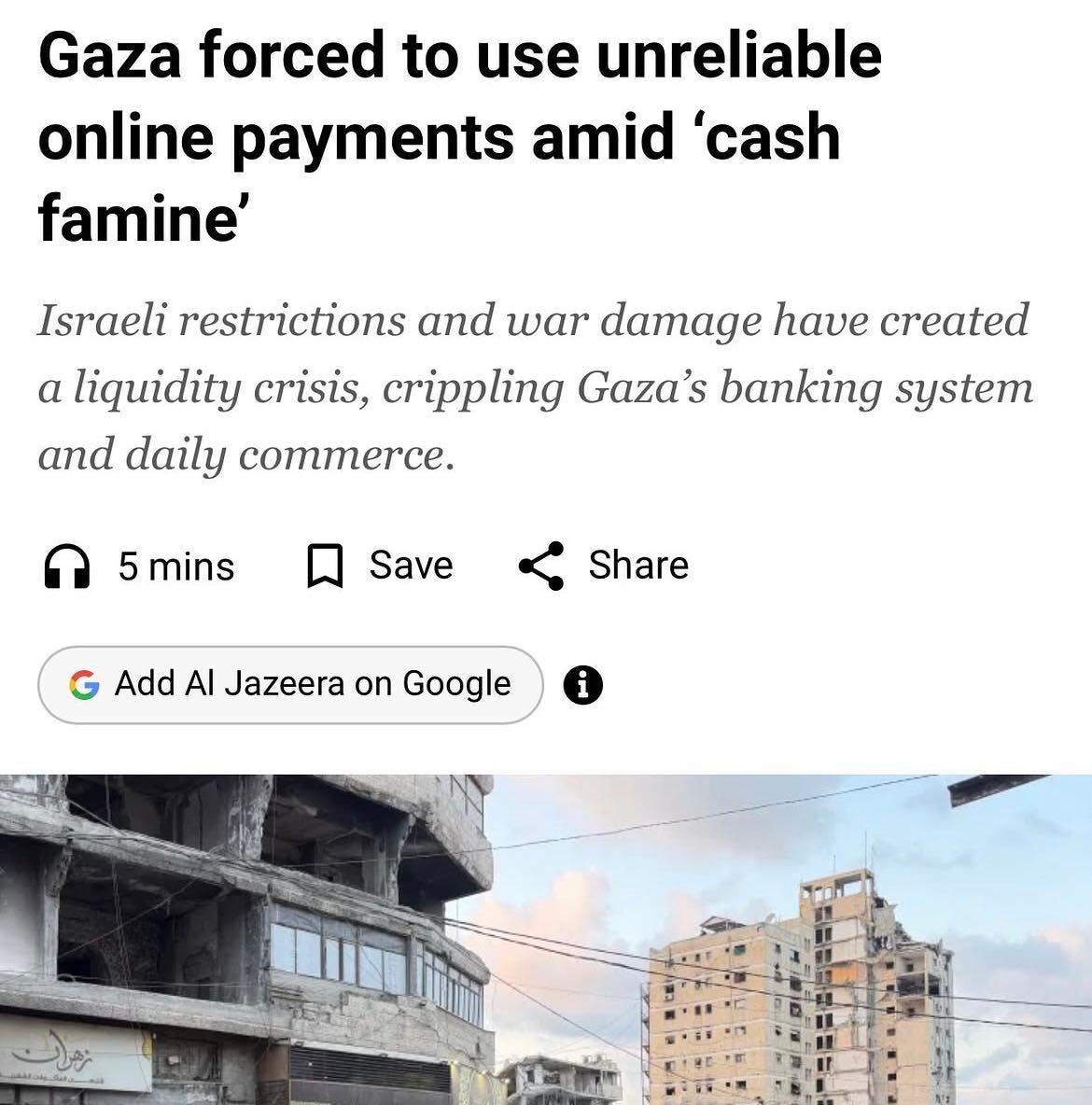
Read the full article here and consider supporting Nour’s work by sharing this post and contributing to her fundraiser.
Nour Abo Aisha

A writer, storyteller, and journalist from Gaza, driven by a passion for creative thinking and psychological insight. As a survivor of the October 7 war, she broadcasts her lived experience into powerful narratives that center the human condition and amplify Palestinian voices.