
Re-engineering Consciousness
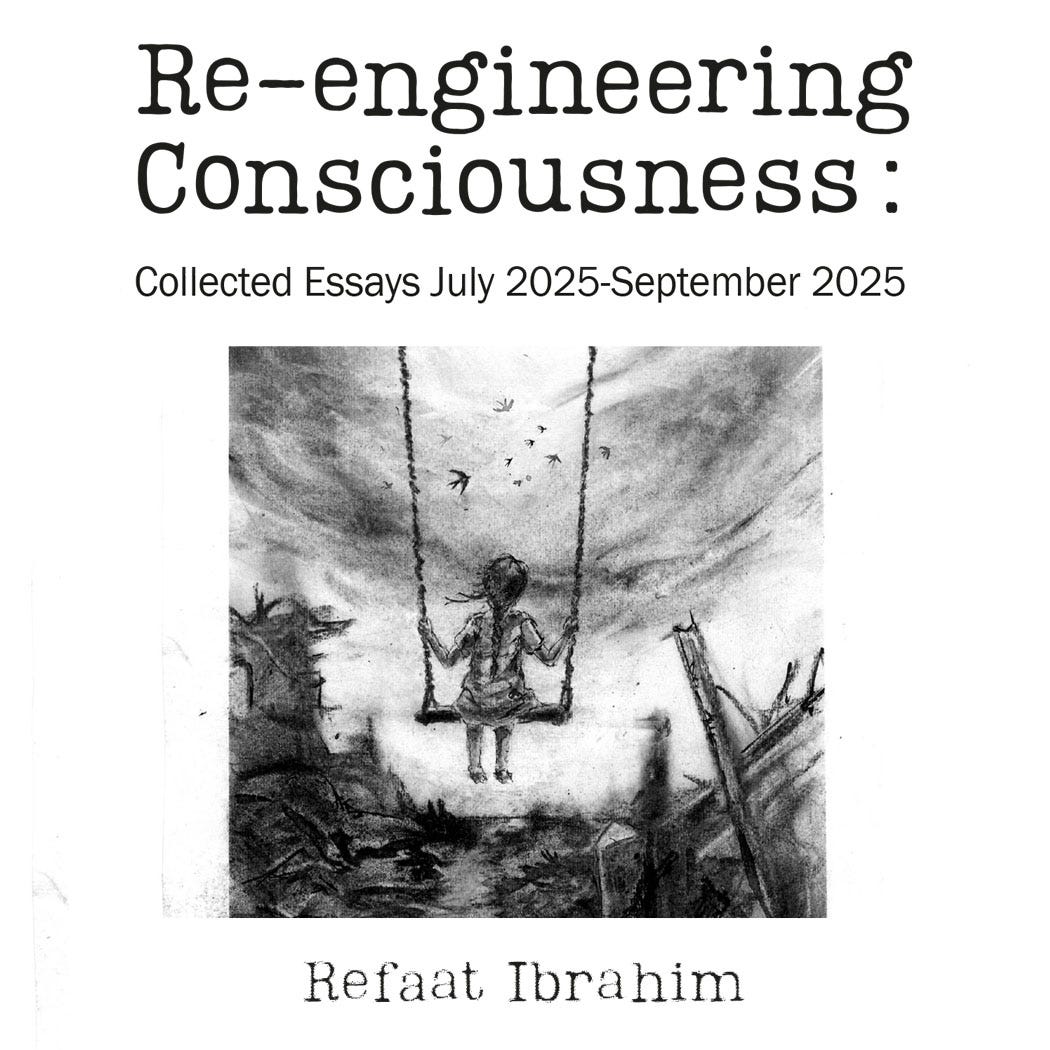
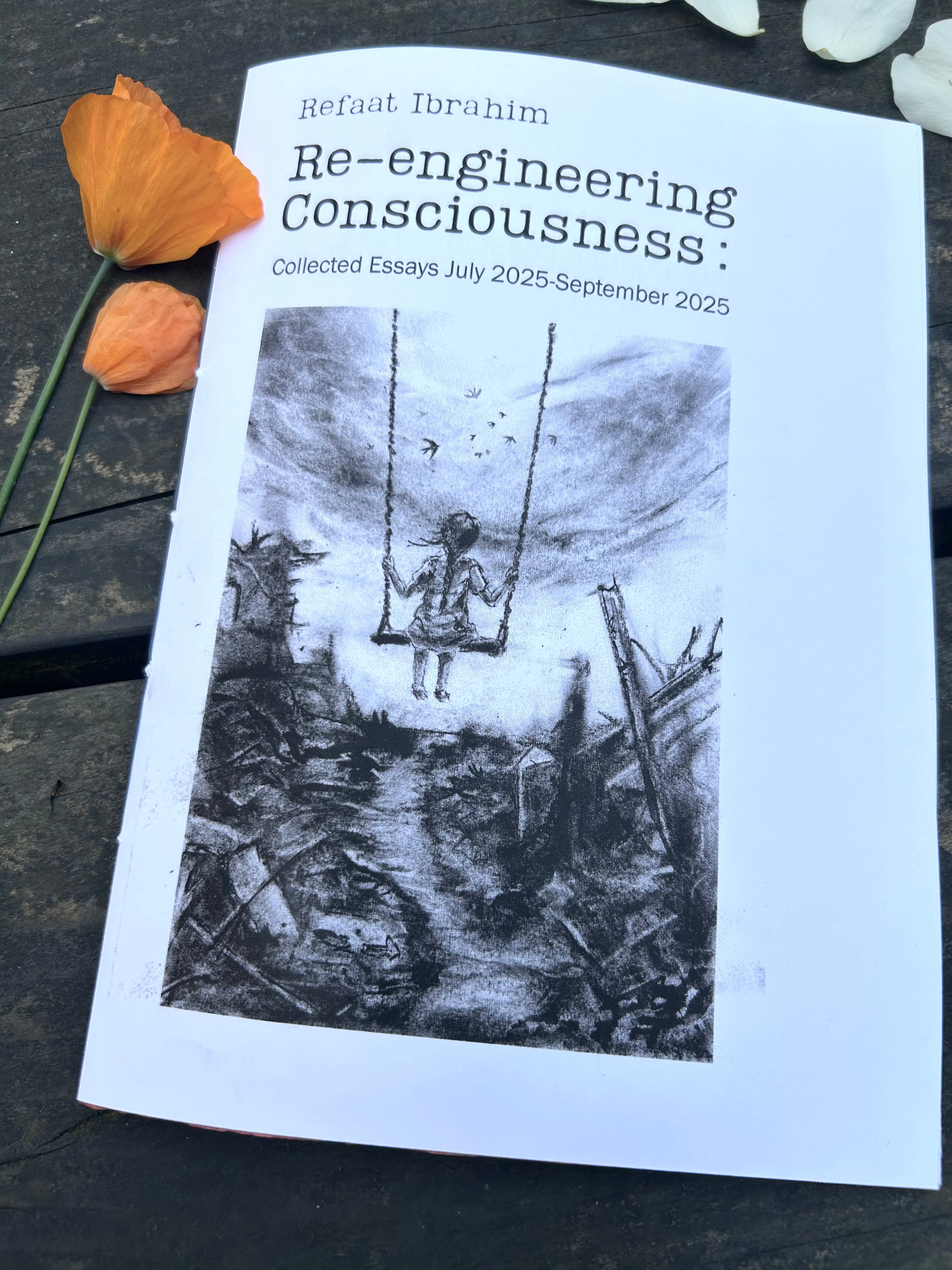
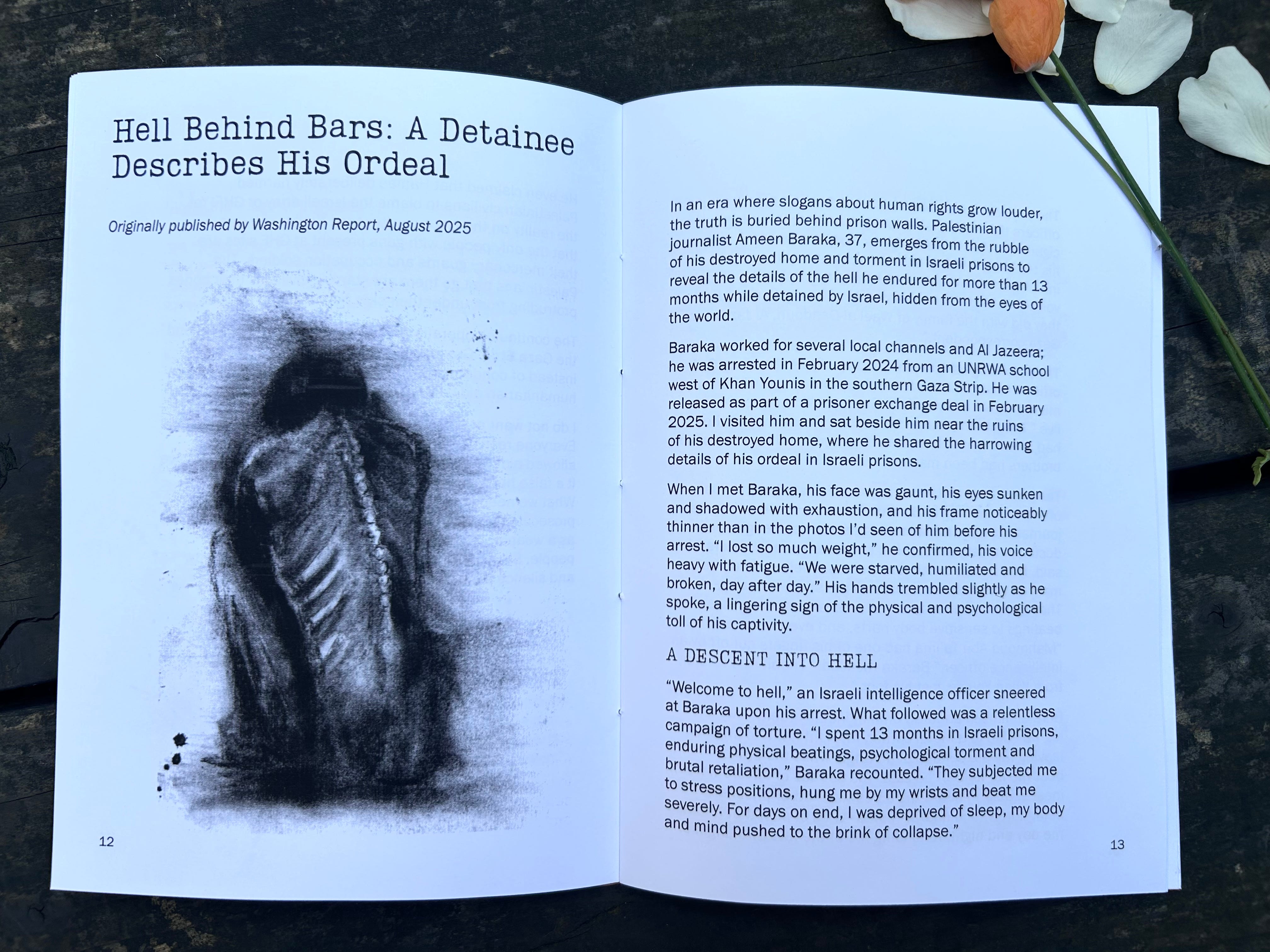
The second of a three-zine collection of journalist Refaat Ibrahim’s published articles, Re-Engineering Consciousness details how humanitarian aid has become a cover for organized killing, how detainees witness hell behind bars, and how the occupation uses hunger and other means of deprivation to manipulate and rupture Palestinian consciousness and identity.
Letter to the Reader
I am Refaat Ibrahim, a Palestinian writer from the Gaza Strip, and that fact alone is enough to weigh my pen down with profound sorrow. In truth, I never wished to write what you are about to read. I had hoped my stories and memories would be far more beautiful, but life under occupation shapes your very being against your will, forcing you down paths you never chose. Before the genocide, my linguistic skill found its place in intellectual and social essays, and in poetry, I found immense joy in reading and composing.
However, the war had other plans. It forced me to trade poetry for books on international law and human rights, in which I searched for my most basic right to exist, wanting to plead my case to the world. With grief, I discovered that human rights are guaranteed by international law to all of humanity except to us Palestinians. Why?
Each law that condemns military occupation and prohibits genocide is merely ink on paper, which has deepened my conviction in the absurdity of this world. The world just stands by and watches, many even applauding or providing political, military, and media support to Israel, allowing the victims to be slaughtered in full view and then accused of terrorism.
What you will read here was written during two years of the genocide. These letters were forged under rocket fire, amidst the whistle of bullets, on roadsides, and among ruins. They were written by the graves of my loved ones and on an empty stomach. These words are a gasp from the soul of a Gazan, a fragment of the relentless whirlwind inside the mind of every Palestinian here. They weave together grief, tales of suffering, legends of sacrifice, belonging, and a crushing nostalgia for the homeland.
Ultimately, we are not hobbyists of endurance or lovers of war. We are human beings who love life, even though we have never been allowed to live it as we should. We have great dreams, and we strive with all the resolve we possess to create hope from beneath the ashes, yet the Israeli machine of genocide continues its brutal attempt to crush us.
Images and Text
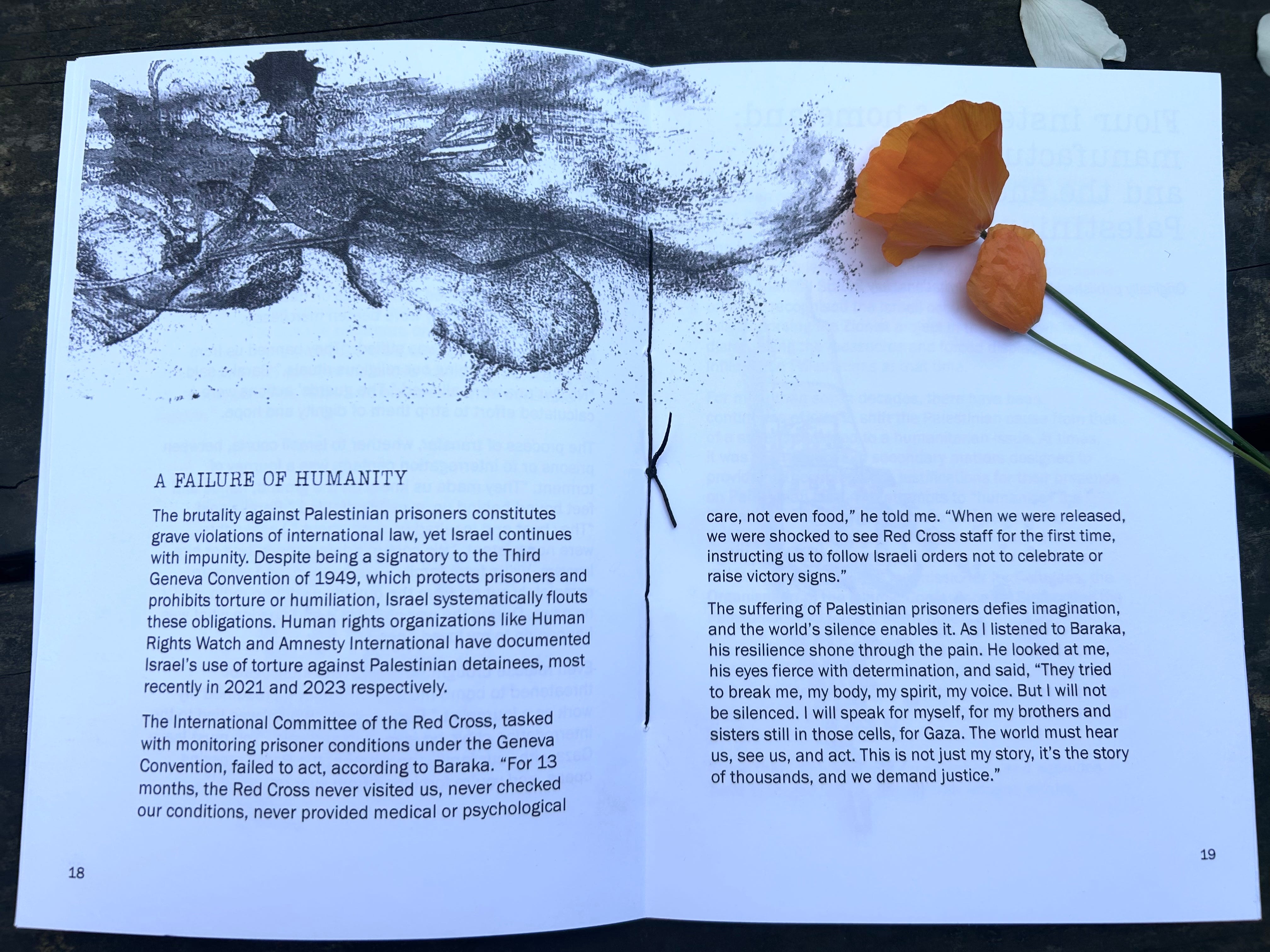
Request for Recognition
Gaza has been under an intellectual embargo for decades. We ask members of the literary community to lend the strength of their voices to our authors. This zine has yet to receive words of recommendation. If you are an established author willing to read and recommend this zine, email us at coastallinespress@gmail.com to receive a digital or hard copy.
About the Author
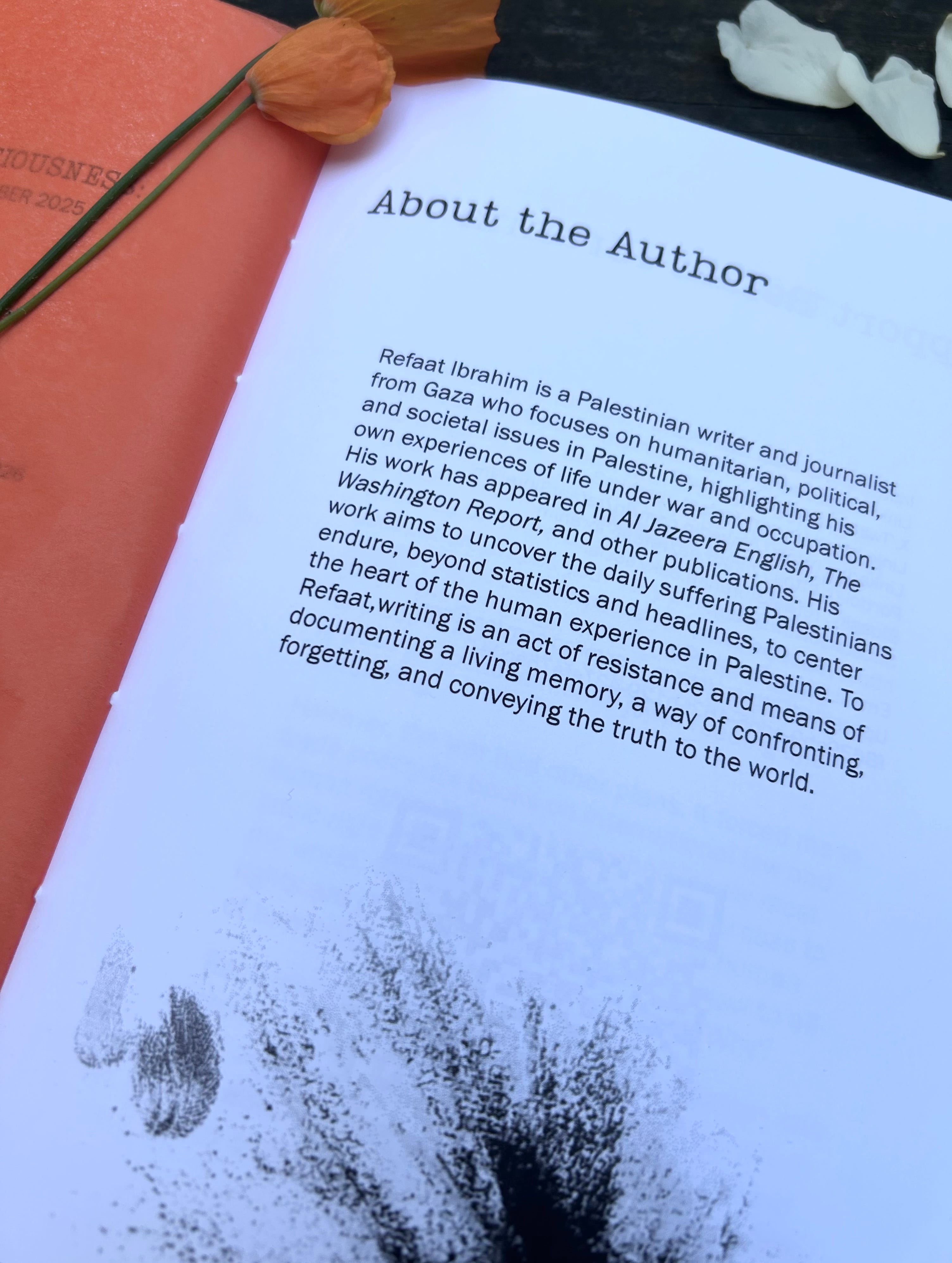
Refaat Ibrahim is a Palestinian writer and journalist from Gaza who focuses on humanitarian, political, and societal issues in Palestine, highlighting his own experiences of life under war and occupation. His work has appeared in Al Jazeera English, The Washington Report, and other publications. His work aims to uncover the daily suffering Palestinians endure, beyond statistics and headlines, to center the heart of the human experience in Palestine. To Refaat, writing is an act of resistance and means of documenting a living memory, a way of confronting, forgetting, and conveying the truth to the world.
Get Your Copy
Zines are available by donation, with all profits going directly to the authors.
To receive a zine:
Click on the author’s name to be directed to their personal fundraiser and make your donation.
Email proof of donation to coastallinespress@gmail.com.
For a digital zine (PDF): we’ll send the file to your inbox.
For a print zine (hard copy): include in your email the number of copies you’d like and your delivery address, and we’ll send them by post.
For translated editions: inquire if the zine is available in your language. Some zines have English, French, German, Italian, Japanese, Chinese, or Spanish translations.