
More than Victims
Illustrating Refaat Ibrahim's zine, "Re-engineering Consciousness"

A few weeks ago, I had the privilege of illustrating one of Refaat Ibrahim’s zines, titled “Re-engineering Consciousness.” Refaat’s texts are brutal in their clarity and observation. They open the reader’s eyes without pathos or sentimentality, reporting on the suffering and struggle for survival of the Palestinian people, culminating in the ongoing genocide in Gaza.
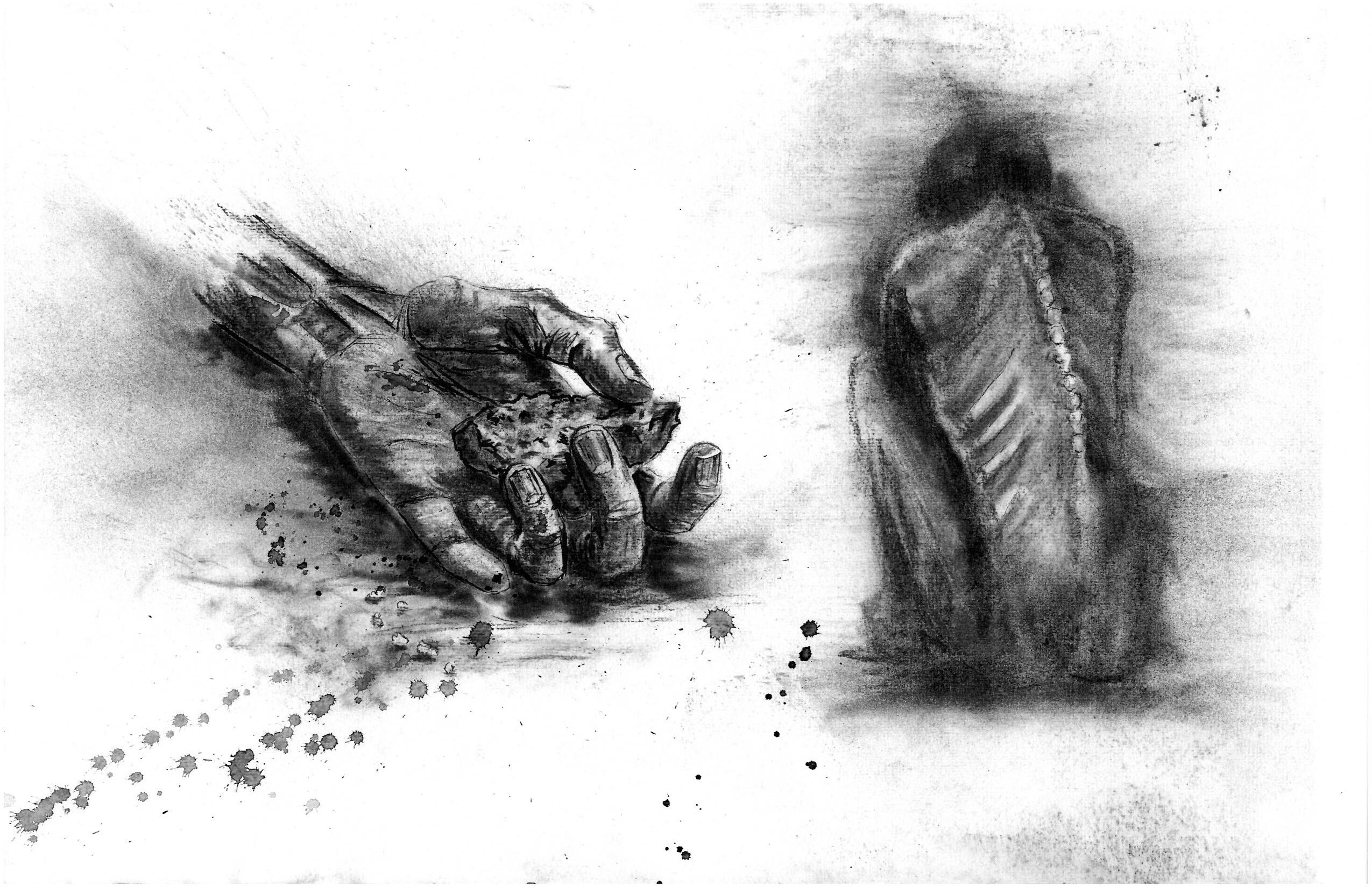
My drive was to transfer that clarity onto paper. For this, I chose charcoal as my medium of choice, also because coal, as a remnant of something burned, seemed symbolically fitting for the suffering and destruction in Gaza.
The first of the four essays in the zine deals with the killing of civilians at the so-called “aid sites” of the GHF, recounting Refaat’s experiences there and the death of his friend Nader. It moved me deeply on a personal level, because I too have a friend in Gaza who nearly fell victim to this death trap and has since been battling the daily consequences of his injuries. One only needs to imagine people driven to the brink of madness by weeks of deliberate starvation, to the point where they would rather risk being shot than return to their families without bread. My illustration therefore shows the hand of a dying person, still clutching the little piece of bread for which he gave his life.
The second essay, “Hell Behind Bars,” is about the Israeli torture prisons where Palestinians are subjected to unbearable suffering through torture, sexualized violence, hunger, and inhumane detention conditions. Refaat’s text is an indictment, directed also at international bodies and governments that remain silent in the face of these now well-documented atrocities and war crimes.
As an artist, I have been grappling since the beginning of the genocide with the question of how—and whether—one can do justice to this suffering in art, especially when one is not personally affected. Ultimately, one remains an outside observer, no matter how deeply one engages with the subject matter. I believe that the zines from Coastal Lines Press have found an answer to this question. They place the voices of those affected—the people who must experience this genocide firsthand—at the center. For us as illustrators, therefore, the primary task is to support these texts visually, to translate their essence into the visual realm, and to make them a vehicle for the eye and the imagination.
When I sent my drawings to layout designer Veronica Petrie, she drew a parallel to Goya’s “Disasters of War.” Together we developed the idea of supplementing the drawings with hastily applied charcoal strokes and smudges, giving Refaat Ibrahim’s zine the aesthetic of a “Diary of the Genocide.” And I think that is also what makes Refaat’s texts so powerful: it is the unadorned truth, bearing witness, documenting so that future generations may remember. But it is also a sharp indictment of those who silence and downplay the suffering of Palestinians. In his fourth essay, the author accuses Israel of not only killing people in Gaza but also seeking to destroy Palestinian identity. “The goal is to turn them into beings without dignity, identity or hope.” For me, Refaat reclaims this identity through his texts. He shows that the dead are not just nameless numbers, that the soul of Palestine cannot simply be erased. This is “re-engineering consciousness” precisely.
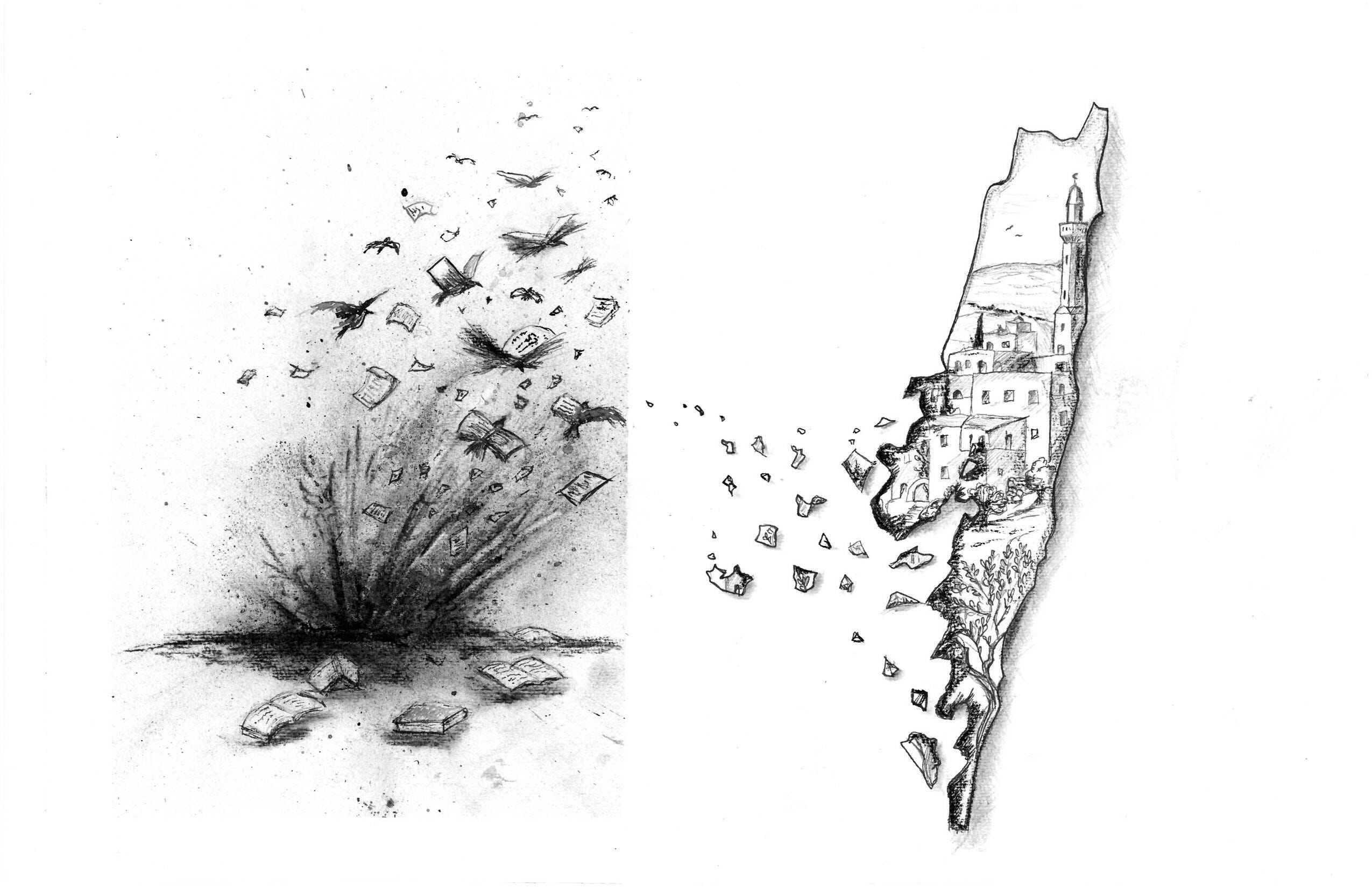
Refaat subverts the term by turning it against its oppressors: while the genocide seeks to dismantle Palestinian humanity and memory, Refaat’s work reconstructs it. By documenting the specific names, stories, and dignities of those targeted, he refuses the reduction of Palestinians to mere victims or statistics. Instead, he engineers a new consciousness; one rooted in resistance, remembrance, and an unbreakable sense of self; proving that identity survives even when bodies do not.
Written by illustrator Judith Rehermann
Get Your Copy
Re-engineering Consciousness

The second of a three-zine collection of journalist Refaat Ibrahim’s published articles, Re-Engineering Consciousness details how humanitarian aid has become a cover for organized killing, how detainees witness hell behind bars…
Refaat Ibrahim

A Palestinian writer and journalist from Gaza who focuses on humanitarian, political, and societal issues in Palestine, highlighting his own experiences of life under war and occupation. His work has appeared in Al Jazeera English, The Washington Report