
Indicia
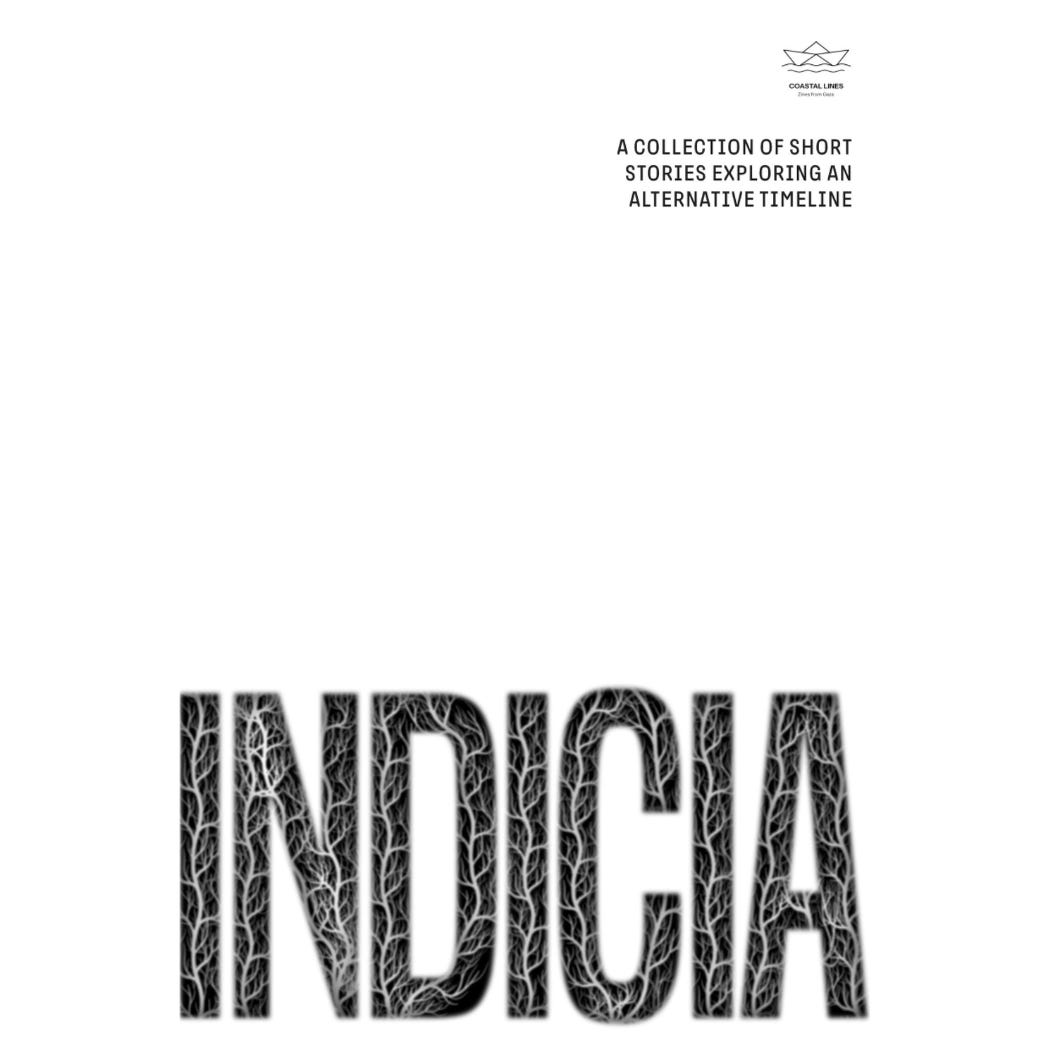
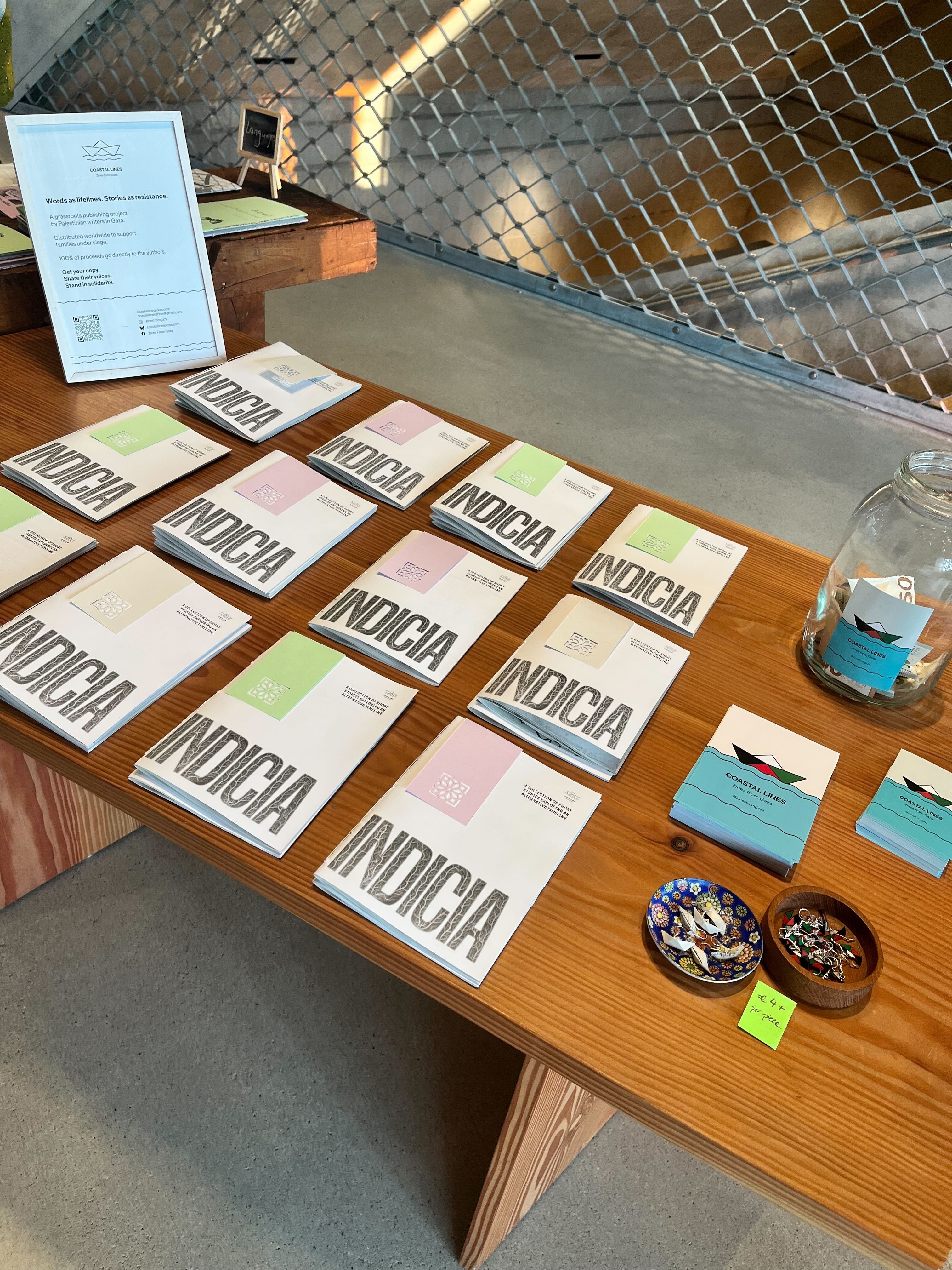
A collection of stories by Gazan authors focused on alternative archives through imagination, materiality, and Indigenous Authority.
What does it mean to archive a place while it's being erased?
How can imagination be both rigorous and resistant?
What stories emerge when we write from the perspective of land, concrete, and seeds rather than only human voices?
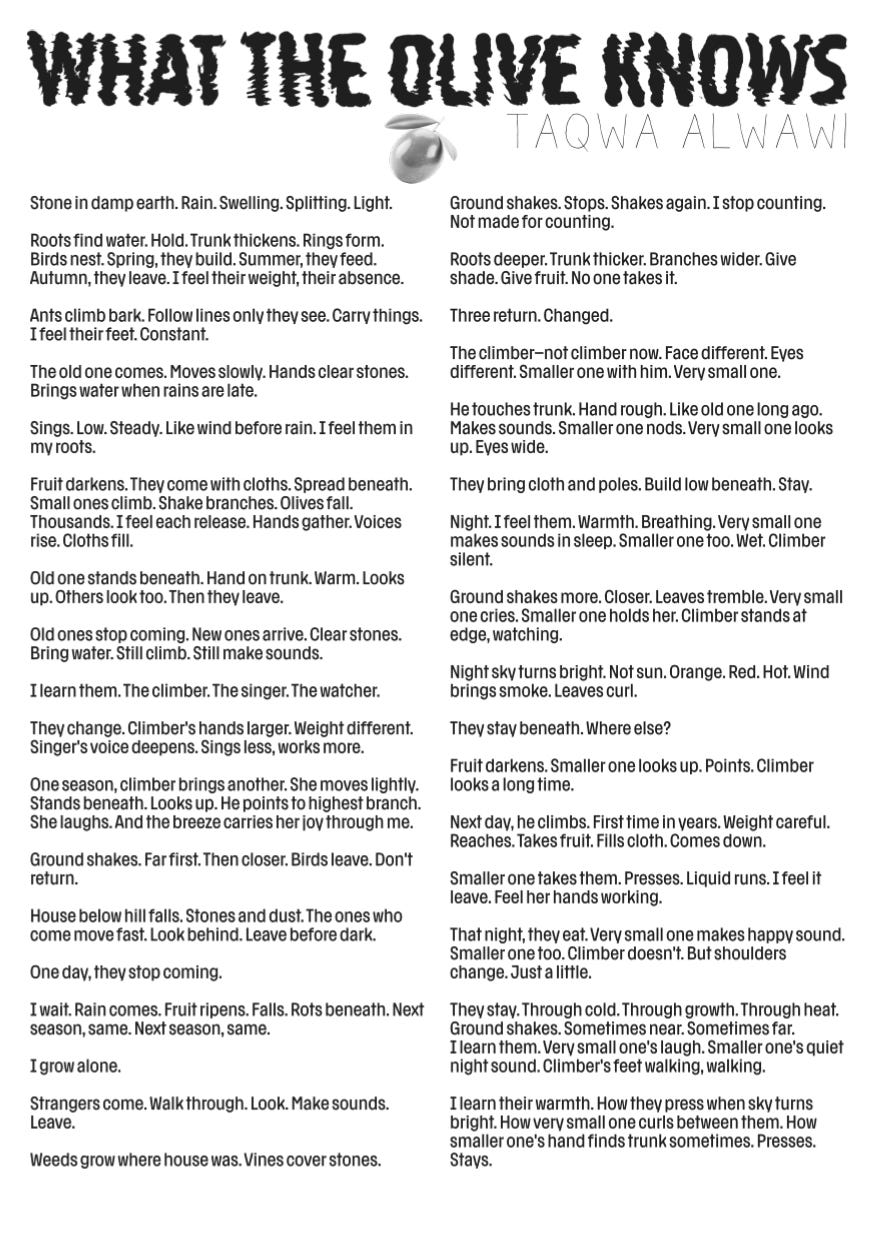
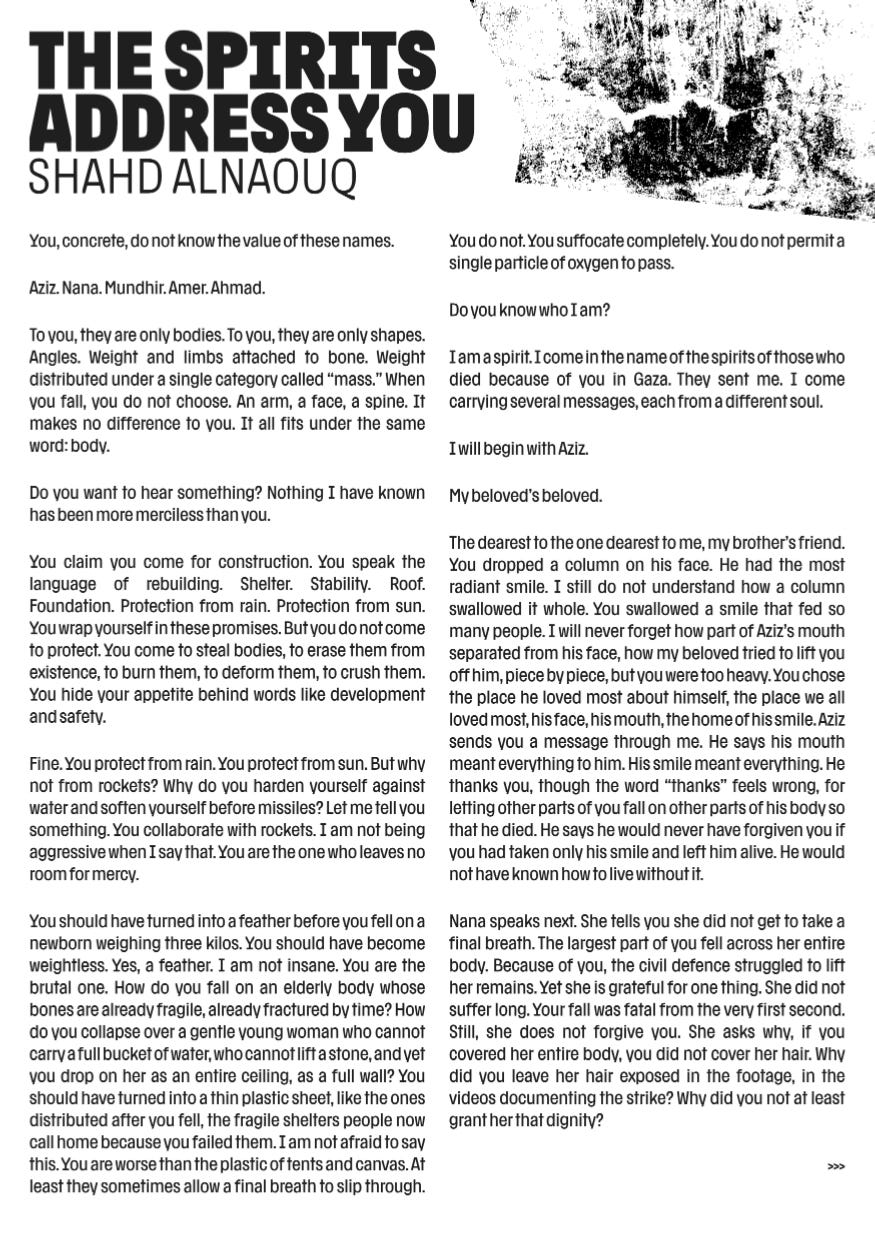
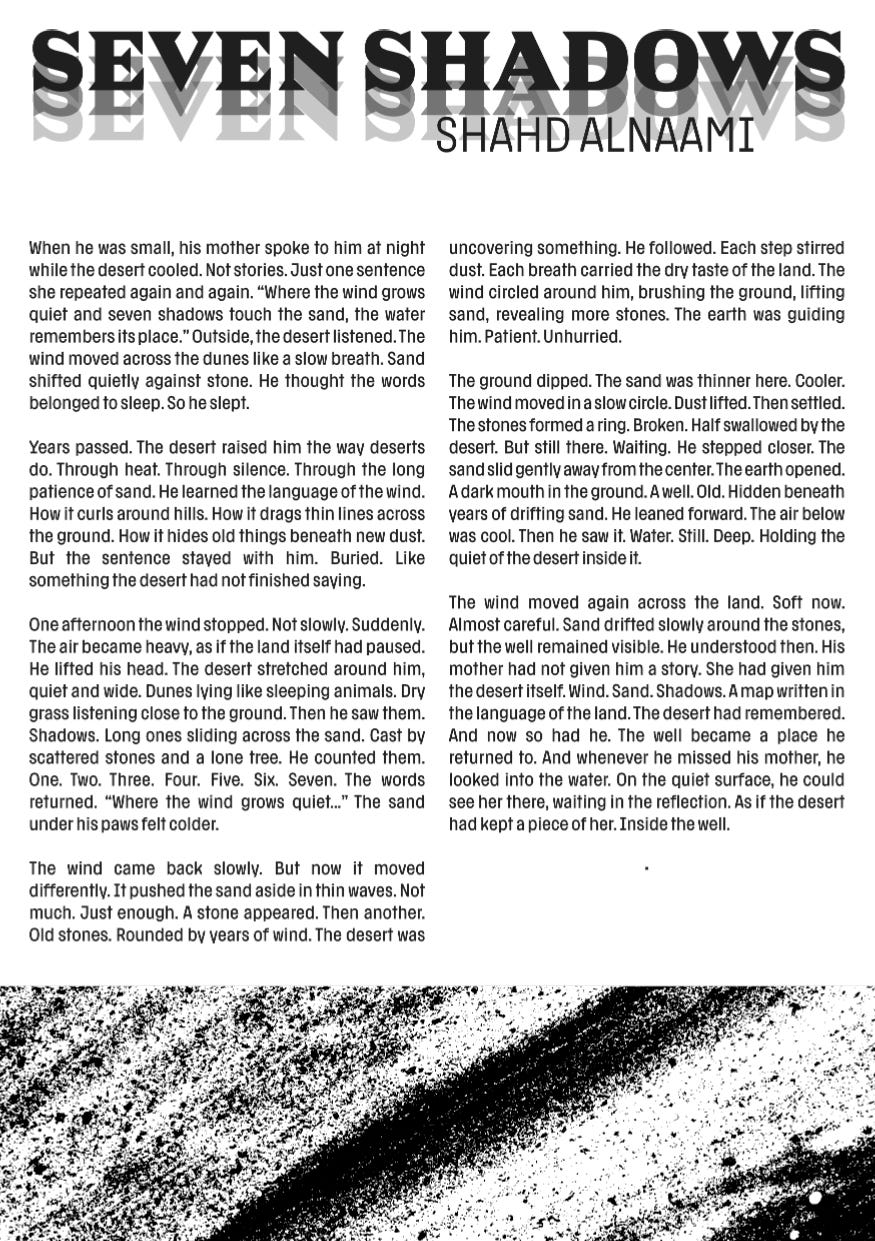
This three-story zine (per author) carries experimental approaches to documenting, imagining, and witnessing Gaza. Across three distinct, yet connected stories, the authors explore an alternative timeline where collective land systems continued uninterrupted, the material truth and deception of concrete infrastructure, and the perspectives of non-human others who live alongside us in silence.
Rather than providing a testimony, these zines practice what the authors call "grounded imagination"-creative work deeply rooted in research, oral history, ecological knowledge, and material reality. Together, they refuse the flattening of Gaza into a single story, instead offering multiple temporalities, scales, and perspectives that cannot be reconciled into one neat label.
Images and text


Event and Panel Discussion
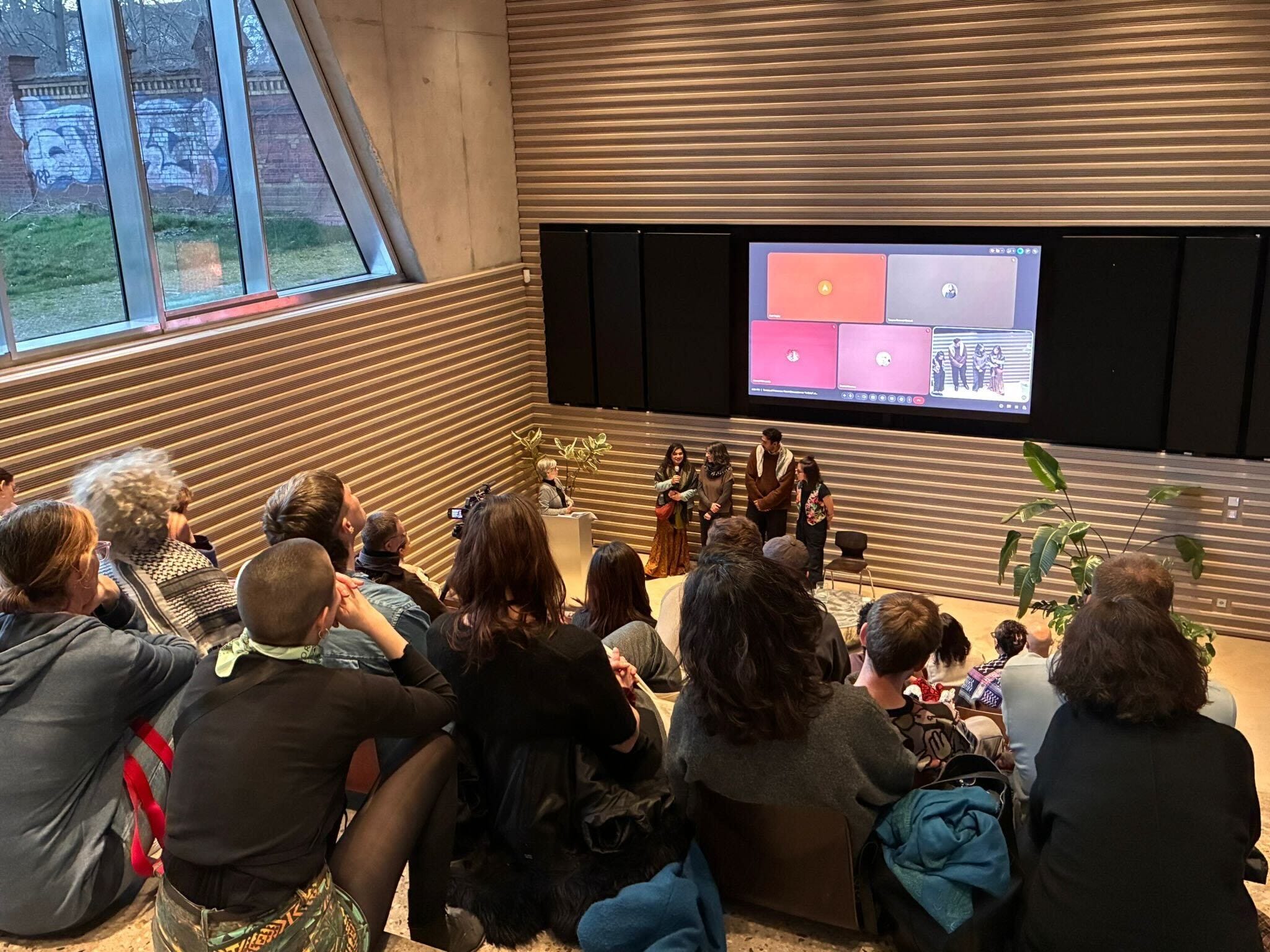
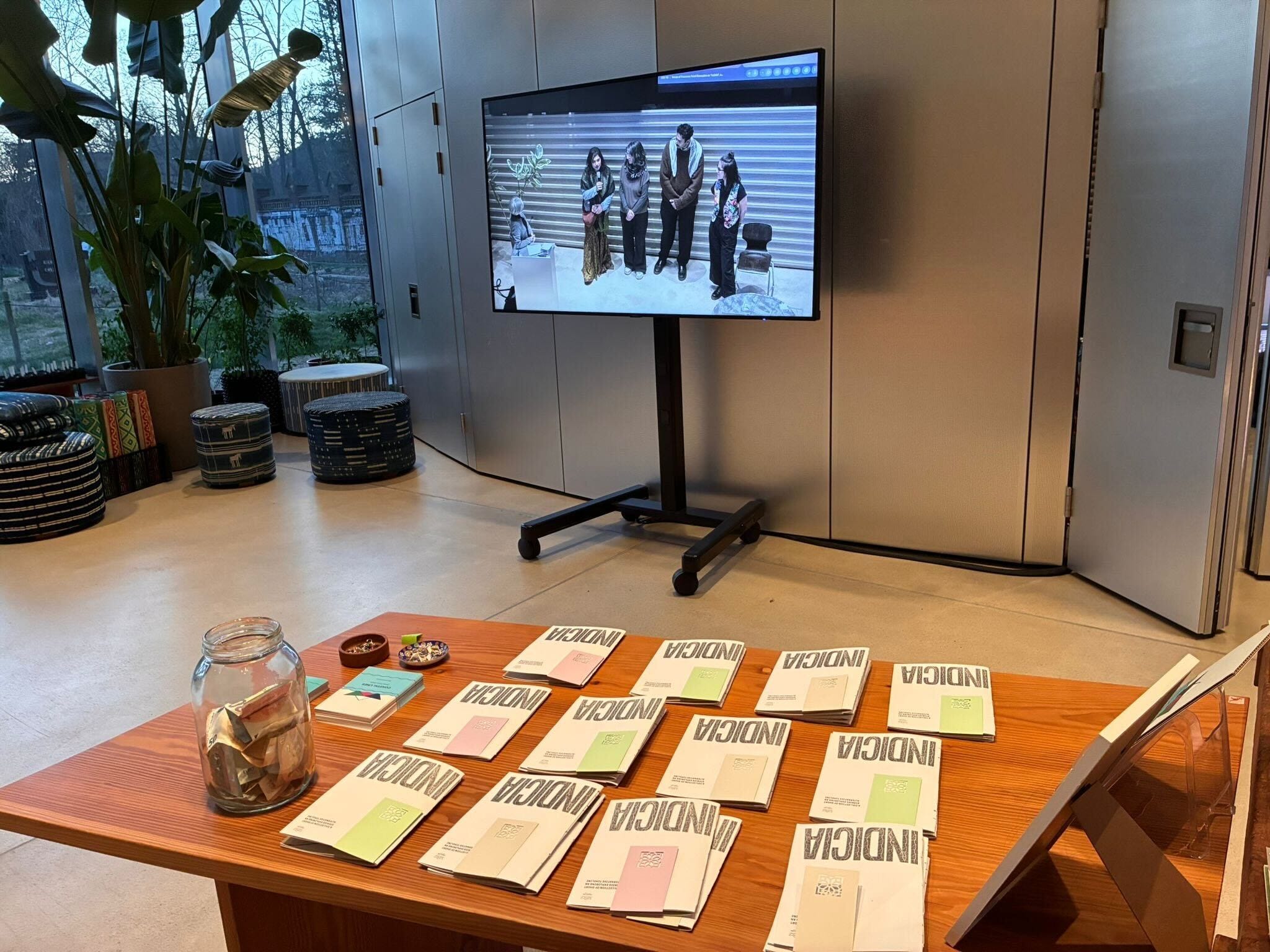
Tenses of Presence: A Panel Discussion took place on March 21st, at Spore Initiative, Hermannstraße 86, Neukölln. The live-streamed event was moderated by Abir Kopty.
Watch on YouTube
About the Authors
Taqwa Ahmed Alwawi, Palestinian writer, poet, and editor living in Gaza (born 2006), is a chronicler and the guardian of her community's memory through her writing. She is dedicated to amplifying Gaza's voice and sharing stories often left untold. Her work has-appeared in over 30 international platforms.
Shahd Alnaami is a Palestinian writer, poet, and translator from Gaza. She studies English Literature and Translation at the Islamic University of Gaza. Shahd is the author of The Writings of Shahd Alnaami, a globally distributed zine in its second expanded edition, translated into multiple languages. She is also the author of However Fragile, a short jllustrated story that explores memory, resilience, and the quiet strength that emerges from human vulnerability. Her writings have also been published on AlJazeera, We Are Not Numbers, The Electronic Intifada, and other international platforms.
Ahmad E. is a Palestinian writer born in Gaza City. His work explores how time moves through people--how memory, loss, and resilience shape both individual and collective experience. Through fiction and creative projects, he seeks to capture the subtle intersections between history, emotion,and the present moment.
Shahd Alnaouq is a Palestinian writer, poet, and translator from Gaza, studying English Literature and Translation at the Islamic University. Writing from the heart of Gaza, she transforms survival into language. She tries to turn wordsinto a reflection of hope while capturing the struggles of her people. Shahd is the author of the zine Our Pulse Against the Drones, with her poems published through We Are Not Numbers.
Potential for Academic Collaboration
Gaza is under siege. In addition to material forms of violence, such as starvation and bombardment, occupation forces control the crime scene, preventing the flow of information from Gaza to the rest of the world through the destruction of Gaza’s educational infrastructure and professional communities.
Ways to Get Involved
Creative workshops, panel discussions, curriculum inclusion, and editorial relationships are some of the ways academics can help Gaza’s surviving professionals build connections to the outside world and sustain their histories, imaginations, and psychological wellbeing.
Academic communities are not monolithic. Educators know best what possibilities lie within their reach and collaborations can take many forms.
Creative workshops: consider hosting a creative workshop for our talented authors in Gaza. Produce a special edition zine to be published and distributed through our global network of volunteers, providing live-saving funds and literary development to these developing young writers and professionals.
Panel discussions: organize speaking opportunities to discuss this special edition zine (Indicia) or the writers’ discursive practices under siege and bombardment.
Curriculum inclusion: Indicia and other zines are connected to the personal fundraisers of the authors. If you’d like to include Indicia or other zines in your course material, consider contributing a sum of money to the authors’ personal fundraisers for the use of their work in the classroom environment. We can provide you with the print file for the zine/s or if we have volunteers near you, we can provide copies of printed and bound zines for your use in a lecture.
Editorial relationships: organize a collective of professional colleagues to provide editorial review of our authors’ creative writing within an allotment of time, for example over summer break. In the context of the scholasticide inflicted on Gaza, these professional relationships will help sustain and develop the quality of Gaza’s histories and testimonies, ensuring the survival of the Palestinian voice for generations to come.
Fundraising: host events, such as poetry readings, where zines can be viewed and sold. With our growing network of global volunteers, there may be people in your local community that can print, bind, supply, and table the zines at your event. Zines are typically purchased by use of the QR codes inside, but a cash alternative can be arranged if the allotted time, space or technology at an event are inadequate for digital transactions. Fundraising platforms used by our authors include Paypal, Chuffed, and GoFundMe.
Reach out to the authors individually or coastallinespress@gmail.com to arrange collaboration. Visit our author page to access their bios and contact information.
For a personal copy of Indicia, contribute a sum of your choice to each of the four authors. Send your receipts to coastallinespress@gmail.com and specify your preference for a digital version or a hard copy.