

Survivor Memory
This piece took three weeks to write.
Three weeks of journaling, remembering, and sitting with memories I did not choose, memories shaped by war.
I write this as a survivor,
not because I escaped death,
but because I continue to live with what remained after it.
What does survival mean to me?
The moment this question was asked, that night returned to me.
The eleventh night of the war.
We were informed that the mosque near our home would be targeted.
Everyone sat waiting:
whispered prayers, opened windows, and took precautions every Gazan household heeds before the warning call.
As for me,
sleep overtook me.
I slept like a child who does not understand war,
who does not know the weight of waiting for an explosion.
When I woke up,
the mosque had been bombed.
In that moment, I realized that I had survived.
Not a survival of the body,
but a survival from fear, from that terrifying sound which, had I heard it,
would have crept into my heart and settled there forever.
I survived because I did not hear it.
And I survived because my heart, that night,
remained asleep.
Yellow
Today, I woke up hating the color yellow.
I hate the occupation.
And I hate this entire world.
Today, I feel that Gaza is shrinking.
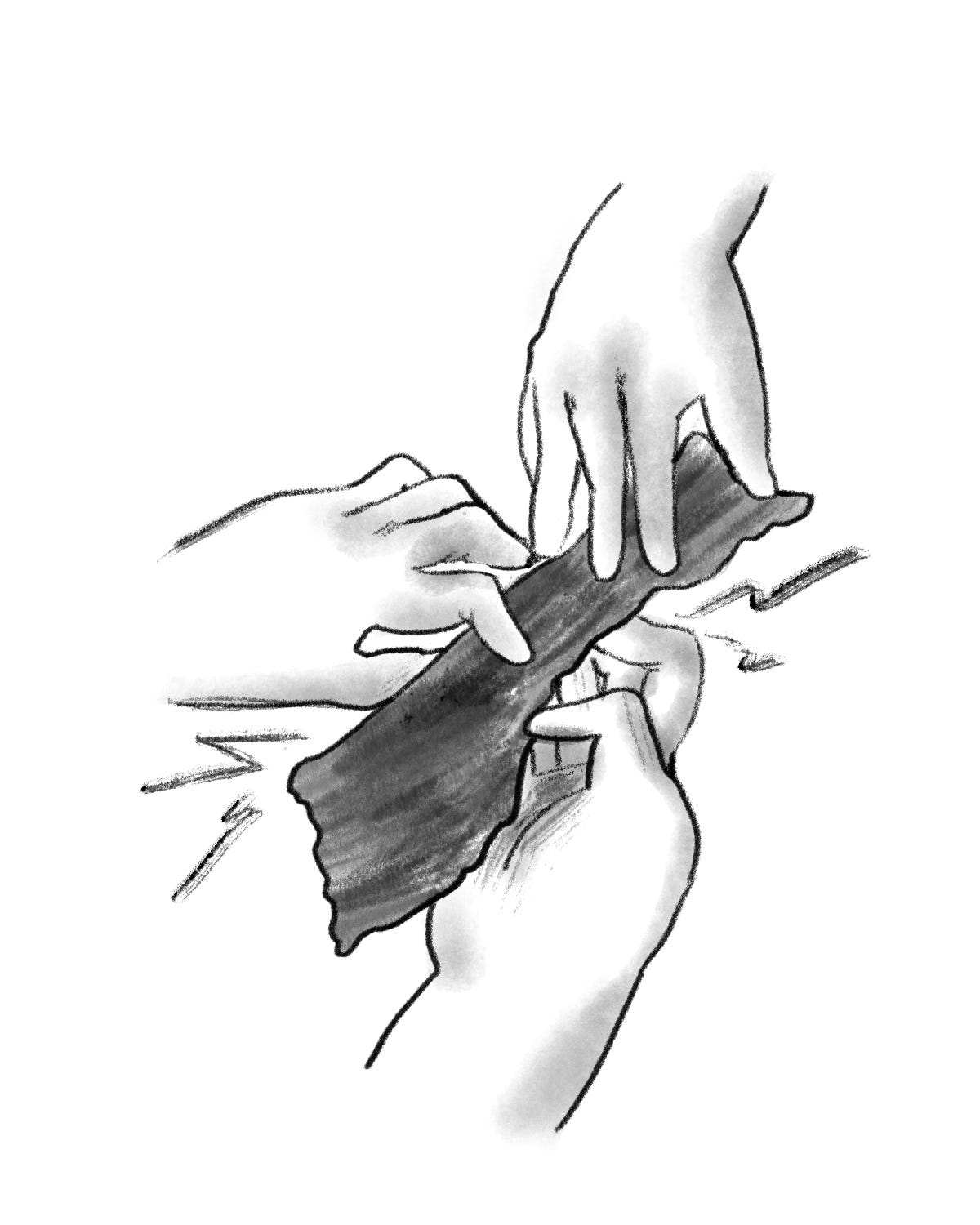
Shrinking day after day,
as if it is being pressed between hands we cannot stop.
How long will we keep watching?
How long will we stand powerless,
counting the days,
owning nothing but observation.
Death
In the early days of the war, the days were not easy for me.
I will never forget the news of the martyrdom of Rawan, the daughter of a family friend.
That day, I was sleeping in a corner of the house we decided was the safest.
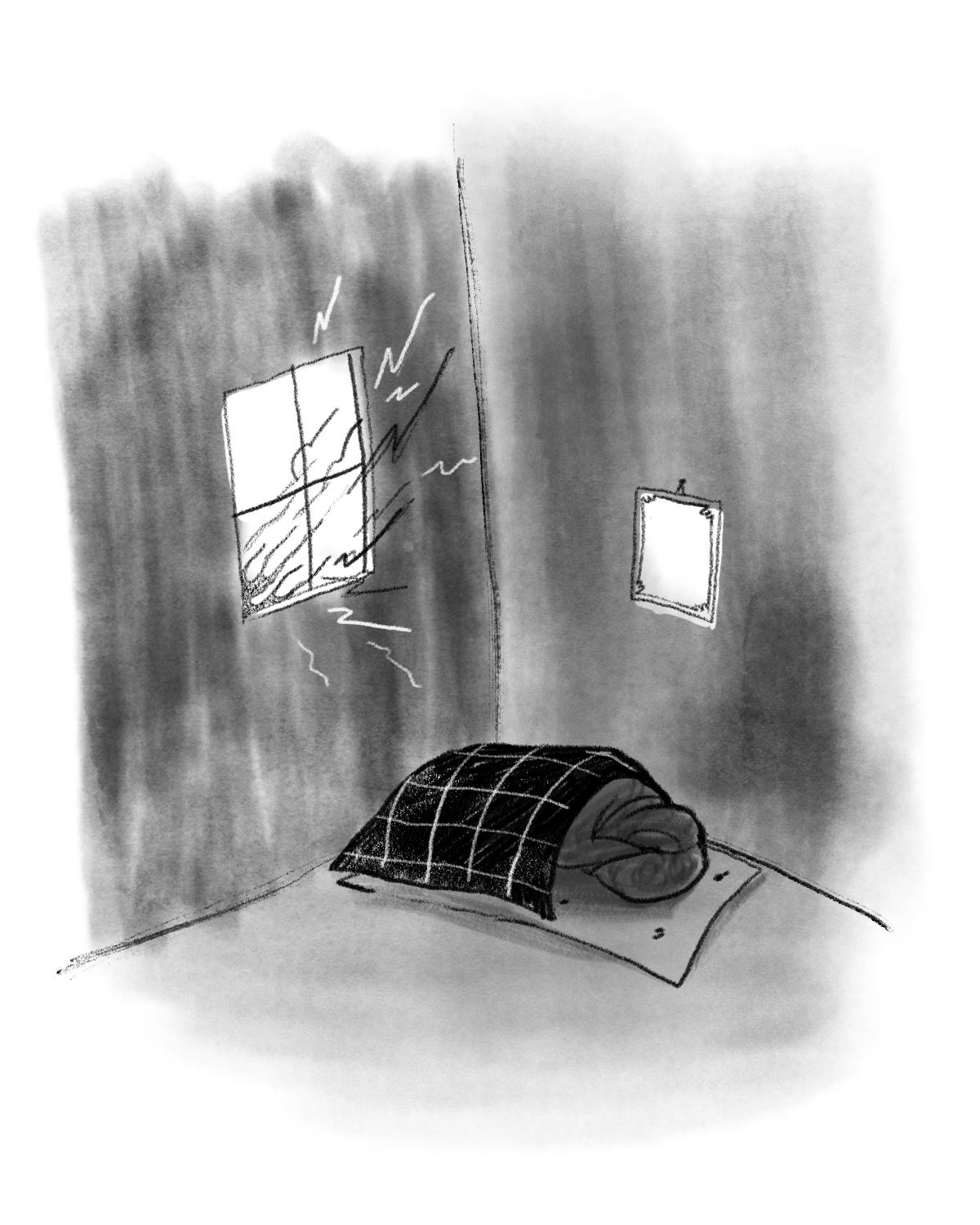
We do not know why.
There are no standards.
But my family felt it.
A house near ours was targeted.
I felt startled.
I could not get used to that sound.
It confused me,
terrified my heart,
and made me cry hysterically.
After every strike,
family members tried to ease the horror of the sound, even though fear lived inside all of us.
But absorbing shock differs from one person to another.
Hours after that bombing,
we received the news about Rawan.
I did not believe it.
I felt trapped in a disturbing nightmare,
waiting to wake from it.
But I did not wake up.
Her mother did not know.
She had no close person except my mother.
My mother was the one who told her,
and prepared her for the news.
I was nineteen years old that day.
It was not the first war I had lived through,
but it was the hardest.
I asked my mother:
How does a person feel at the moment of death?
She answered me, like a needle’s prick:
“Death has become salvation, those who die are the ones who survive now, my daughter.”
Sometimes I Want to Go Away
Do you, who live outside, feel fear when you go to sleep?
Do you feel afraid when your children go to school?
Destruction surrounds you,
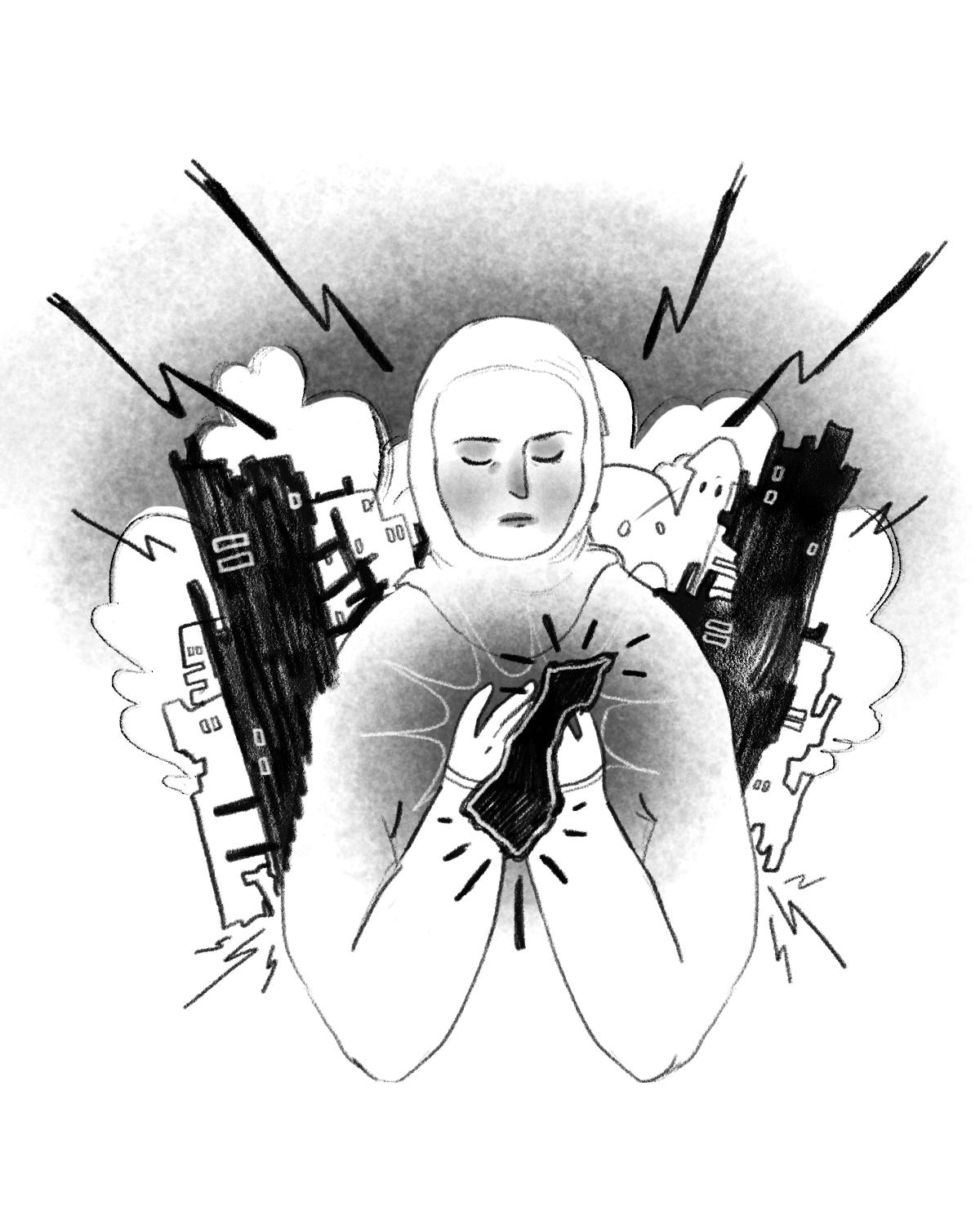
in every direction your eyes fall.
How can you live a normal life
in a place filled with destruction?
Do you ever feel the urge to change something in your life,
only to realize you are living under occupation?
Here, we are treated according to the occupier’s will,
handled like marionette dolls,
moved and stopped at their command.
The Sound of Displacement
The sound of transportation is the sound all displaced people hate.
We hate the driver,
and we hate his assistant, the one standing at the back of the vehicle, calling out the names of places.
Places I am forced to live in.
Places that never embraced me the way my place did.
Gaza is the place I belong to.
The war does not end.
The moment I hear the sound of bombing,
even after the announcement of a so-called ceasefire,
all these thoughts rush through my mind like a fast, uncontrollable reel.
Because for survivors,
the war does not end when the bombs stop.
It continues in the sound,
in the memory,
and in the body that never forgets.
Noor Arif is a business administration student from Gaza who believes that education comes above everything. She works as a social media coordinator with the Gaza Great Minds School and as a writer. She uses her love for writing and social media to express what she lives through in her own way and to raise the voices of Gaza’s children. She has written for The Palestine Chronicle, Impulse, and We Are Not Numbers.
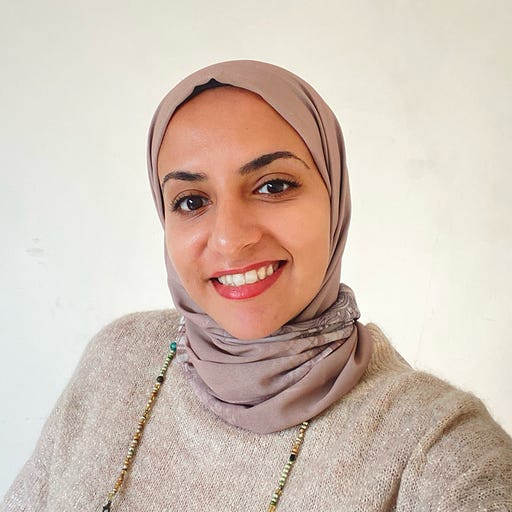
Noor is the author of Waiting for the Butterfly, illustrated by Sammi Wu.
Waiting for the Butterfly

An intimate pursuit of the will to keep going, despite heavy loss and destruction. Hope for transformation, for a better life, is as fragile as a butterfly’s wings and more fleeting. Gaza’s youngest generation suffers the loss of nearly five year…
Want to support Noor?
Contribute to her fundraiser.
Follow her on Instagram.
Email: noorabumariam9@gmail.com
Send proof donation to coastallinespress@gmail.com to receive a digital or print copy of Waiting for the Butterfly. For print copies, include your full name and address in the email.